
Thirteen states have enacted Alyssa’s Law legislation as of July 2026, and they did not all pass the same law. Eight are mandates that require panic alert capability. Three are consider states that require the question to be weighed in safety planning. Two are authorizations that empower school boards without compelling them. Vendor maps routinely inflate that count and flatten those differences; this page does neither. Every row below is verified against the official legislative record it links, every status uses the statute’s actual verb, and the states advancing toward passage are listed as advancing, not counted as passed.
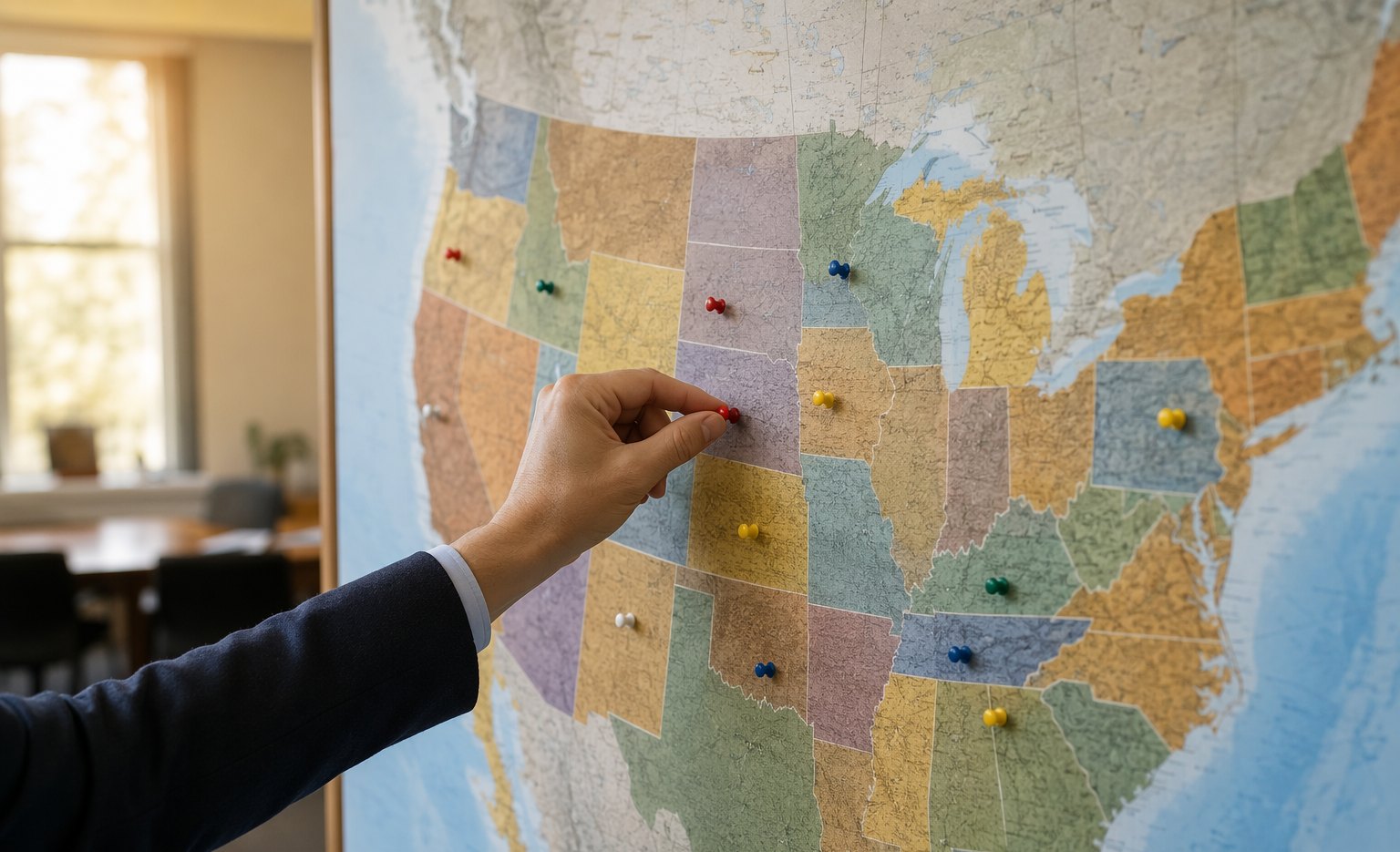
The 13-State Map, Verified
| State | Year | Law | Status | Core requirement |
|---|---|---|---|---|
| New Jersey | 2019 | P.L.2019, c.33 (A764) | MANDATE | At least one silent panic alarm directly linked to law enforcement in each public school building, or a DOE-approved alternative; funded by the 2018 bond act. |
| Florida | 2020 | Alyssa’s Law (signed 6/30/2020) | MANDATE | Mobile panic alert system, the Alyssa’s Alert program, in every public school including charters, from the 2021-22 school year. |
| New York | 2022 | Ch. law signed 6/23/2022 | CONSIDER | Schools must consider silent panic alarm systems when reviewing school safety plans. |
| Texas | 2023 | SB 838 | MANDATE | Silent panic alert technology in each classroom of districts and open-enrollment charters; paired with HB 3’s armed officer requirement and, since 2025, a doubled safety allotment. |
| Tennessee | 2023 | 2023 act (signed May 2023) | CONSIDER | Schools must consider including silent panic buttons as part of security planning. |
| Louisiana | 2023 | SB 207 (2023 R.S.) | MANDATE | Panic emergency notification system alerting law enforcement in every public school; board implementation deadline April 1, 2024, now passed. |
| Utah | 2024 | HB 84 | MANDATE | Emergency communication systems required in public and charter schools. |
| Oklahoma | 2024 | HB 4073 | MANDATE | Mobile panic alert system in every district from the 2024-25 school year, effective July 1, 2024; State Board approved-vendor list; 911 and PSAP integration. |
| Washington | 2025 | SB 5004 | MANDATE | Emergency response system required, developed with law enforcement and PSAPs, including at least one of six options with panic or alert buttons listed first; effective 7/27/2025, district progress reports were due to OSPI October 1, 2025. |
| Oregon | 2025 | HB 3083 | CONSIDER | Emergency safeguards required in every K-12 public school; schools must consider a wireless or wearable panic alarm system with 911 integration. Wireless panic alert grant funding established earlier under HB 3101 (2023). |
| Georgia | 2025 | SB 17 + HB 268 | MANDATE | Mobile panic alert systems in K-12 public schools plus digital campus mapping for responders; school compliance deadline July 1, 2026, now passed. |
| Virginia | 2026 | HB 592 | AUTHORIZE | School boards authorized to provide employees wearable panic alarms linked to 911; signed 4/2/2026, effective 7/1/2026. |
| West Virginia | 2026 | HB 4798 | AUTHORIZE | Wearable panic alert systems authorized in schools, contingent on available funding. |
Reading the Three Statuses
The status column is the most important and most commonly botched detail in this space. A MANDATE means the capability is legally required: a district without it is out of compliance, full stop, and in Louisiana and Georgia the deadlines have already passed. A CONSIDER law requires a documented deliberation: New York routes it through safety plan reviews, Tennessee through security planning, Oregon through its emergency safeguards framework, and in all three the legal obligation is the recorded evaluation, not the installation. An AUTHORIZATION settles the authority question, boards may act and spend, without compelling anyone, which is where Virginia and West Virginia landed in April 2026. Rounding consider and authorize states up to mandates is how vendor content manufactures urgency; knowing which one governs you is how districts make defensible decisions.
Deadlines That Have Already Arrived
Several of the map’s dates are behind us, which changes the character of compliance conversations in those states. Louisiana’s board implementation deadline was April 1, 2024. Florida’s requirement began with the 2021-22 school year and Oklahoma’s with 2024-25. Washington districts filed their implementation progress reports with OSPI by October 1, 2025, putting every district’s stated position on the record. And Georgia’s July 1, 2026 school compliance deadline passed this month. In mandate states past their date, the question is no longer project planning; it is how quickly a documented gap gets closed, a path every linked state guide above covers.
States Advancing Toward Passage
The map grows most years, and the advancing column is deep. Alyssa’s Law legislation has been introduced or is in progress in Illinois, Kentucky, Maine, Michigan, Mississippi, Missouri, Nebraska, Ohio, and Pennsylvania, with Mississippi funding a pilot program and Nebraska’s version introduced as LB 1156. Illinois deserves its own honest note because it is so often miscounted as passed: House Bill 1072, the state’s most recent Alyssa’s Law vehicle, died in the Rules Committee in March 2025, and Illinois currently has no enacted school panic alert law; the full status is in our Illinois guide. Connecticut took a different route: 2025 legislation made panic alarms eligible for its School Security Infrastructure Competitive Grant Program rather than mandating them, funding the hardware without the requirement. Schools in advancing states should read the trend line plainly: when a mandate lands, vendor backlogs and compressed timelines land with it, and the districts that installed on their own schedule will be the ones that chose their hardware and their price.
The Federal Layer
Congress has its own version in motion. The ALYSSA Act, H.R. 1524 in the 119th Congress, reintroduced in February 2025, would fold panic alarm preparedness into the school plans required under federal education law, and it carries a statutory definition, a silent signal, manually activated, indicating a life-threatening emergency requiring law enforcement response, lifted nearly verbatim from New Jersey’s original. It remains in the House Committee on Education and the Workforce; the bill text is on Congress.gov. Whatever its timeline, the federal funding layer already exists: the COPS School Violence Prevention Program funds exactly this technology category today, with FY26 applications closing August 11, 2026, detailed with every state program in Alyssa’s Law funding and grants.
What the Map Means for Your School
Wherever your state sits, the operational question is identical: how fast does an emergency in one of your rooms become a response, and what carries the alert when it matters? Mandate states have a statute to satisfy, consider states have a deliberation to document, authorize states have a green light to use, and every column is served by the same architecture, silent fixed panic buttons for schools connected directly to law enforcement and wired into the PA and bells the campus already owns. Find your state’s guide in the table above for the statute in depth, and when you want the map translated into a number for your buildings, get a quote.
Frequently Asked Questions
How many states have passed Alyssa’s Law?
Thirteen as of July 2026: eight mandates (New Jersey, Florida, Texas, Louisiana, Utah, Oklahoma, Washington, Georgia), three consider states (New York, Tennessee, Oregon), and two authorizations (Virginia, West Virginia). Counts higher than thirteen typically include pending bills or round consider states up to mandates.
What is the difference between mandate, consider, and authorize states?
Mandate states legally require panic alert capability. Consider states require schools to document a genuine evaluation of it in their safety planning. Authorize states empower school boards to deploy it without requiring them to. The statute’s own verb decides the column.
Is there a federal Alyssa’s Law?
Not yet. The ALYSSA Act (H.R. 1524) is pending in the House Committee on Education and the Workforce, and federal SVPP grant funding already covers panic alert technology. New Jersey’s 2019 statutory definition is the template the federal bill borrows.
